Fortnite ranked speedrun: what a Bronze-to-Unreal climb in Reload actually takes
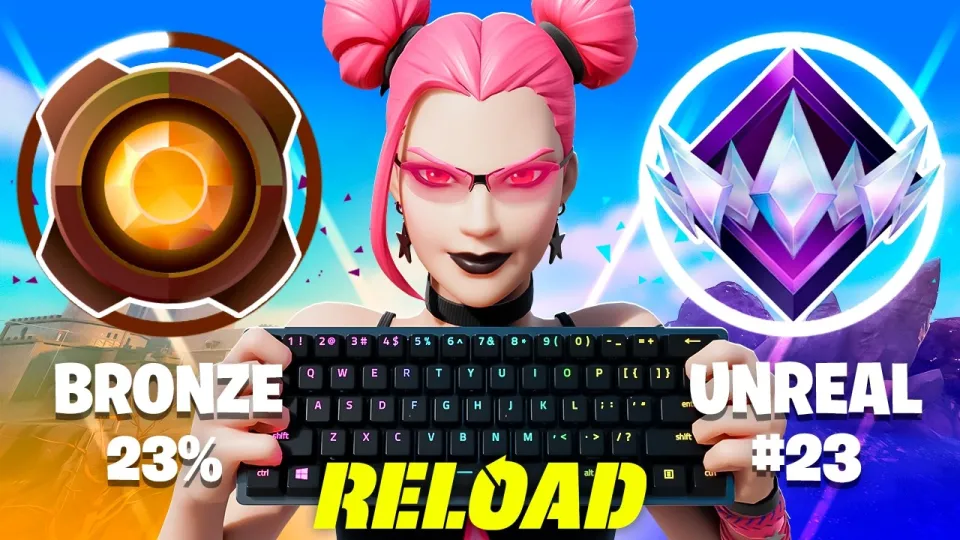
Video: BRONZE To UNREAL Ranked Speedrun In Fortnite Reload!
You can order the same kind of articles for your own video to boost it on YouTube and Google. Just message the Telegram bot @sat_sit_bot. Articles with your video embedded are written and posted by the bot itself — on popular topical sites (no ads). Free trial — 50 articles.
· based on the channel HaloBT
A Fortnite ranked speedrun from Bronze to Unreal in Reload is a climb through eight rank tiers where placement points do most of the work early and elimination points only start to matter once lobbies tighten around Gold. The fastest route is not the flashiest one: it is consistent top-five finishes, smart rotations into the closing circles, and a warm-up routine that keeps aim and edits sharp across a long session. HaloBT's Bronze-to-Unreal run is the reference point here, and his practice builds are listed on his Fortnite creator page.
How the Fortnite Reload ranked ladder is structured
Reload ranked runs on the same tier ladder as the main Battle Royale ranked playlist, but the mode's shorter, respawn-friendly matches change how points accumulate. The tiers are Bronze, Silver, Gold, Platinum, Diamond, Elite, Champion and Unreal, and each tier below Elite is split into sub-divisions that must be cleared before the next tier unlocks. Points come from two sources: placement in the final standings and eliminations. Early tiers are forgiving — a Bronze lobby rewards almost any finish — while Diamond and above punish an early death with a net loss.
The practical consequence is that a speedrun has two distinct phases. In phase one, from Bronze through Platinum, the goal is volume: queue often, survive to the top ten, and let placement points carry the bar. In phase two, from Diamond to Unreal, the goal shifts to conversion: every fight you take has to be a fight you win, because a 20th-place finish with zero kills erases progress.
Reload also differs from standard ranked in match length. Shorter games mean more rank points per hour if you can keep your placement average high, which is exactly why the mode is popular for climbing fast rather than grinding the long-form BR queue.
What a Bronze-to-Unreal run in Fortnite Reload actually demands
A speedrun at this scale is a test of stamina as much as skill, and the players who finish it treat it like a shift rather than a session. The demands break down into a few concrete habits.
- Landing discipline. Pick two or three drop spots and learn them cold — loot density, rotation exits, and where third parties usually arrive. Random drops are the single biggest source of early deaths in Bronze and Silver.
- Placement before frags. In tiers below Platinum, a clean top-five is worth more than a five-kill game that ends in 14th. Take fights you can reset from.
- Rotation timing. Reload circles close quickly. Moving on the first or second tick of the storm warning, rather than the last, is the difference between a top-three and a scramble.
- Session length control. Long climbs degrade mechanically. Breaks every few matches protect the aim consistency that the higher tiers require.
- Input comfort. Controller players should lock sensitivity and deadzones before the run starts; changing settings mid-climb resets muscle memory at the worst possible moment.
Solo queue versus fills: which is faster in Reload
Reload is built around squad play, so a strict solo queue is not the standard route — most climbs happen in fills, and that changes the strategy. In fills, your rank points depend on the team's placement, which means the fastest path is often to play the supportive role: hold angles, revive, and let the stronger teammates take the first fight. A team that reaches the top five four times out of five will out-climb a solo fragger who wins one game and dies early in the next four.
The trade-off is variance. Fill teammates are unpredictable, and a single teammate who hot-drops and dies instantly can drag a promising game into a 15th-place finish. Players who prefer control over pace should queue with at least one known partner; players optimizing purely for speed should accept the variance and requeue fast rather than trying to coach random teammates mid-match.
Why Gold is the wall in a Fortnite ranked speedrun
Gold is where the speedrun usually stops being easy, because the lobby quality jumps before your own habits have caught up. Players arriving from Silver often carry bad patterns — over-peeking, chasing kills into the storm, and rotating late — that were survivable against weaker opponents and become fatal against Gold-level aim.
The fix is unglamorous. First, review the matches where you placed outside the top ten and identify whether the death was a positioning error or a mechanical one; the split is usually about 70/30 in favor of positioning. Second, cut the number of fights per game until your placement average stabilizes, then add fights back one at a time. Third, drill the mechanics that Reload punishes most: box fighting in tight spaces, edit resets, and shotgun-to-SMG swaps at close range. A dedicated practice map shortens this phase considerably, which is the reasoning behind creator-made training islands.
Practice tools and settings that shorten the climb
Mechanical practice is the highest-leverage investment in a climb that spans eight tiers, and it does not require hours. Fifteen minutes of structured drills before a session is enough to keep tracking and edit timing consistent.
- Aim and edit maps. HaloBT's mechanics training island, searchable in Fortnite by the code 6317-4546-8691 or by the creator name, is built around aim, edit and piece-control drills in a single run.
- Warm-up order. Start with tracking, move to flick shots, then finish with edit courses — the sequence mirrors what a real fight demands.
- Sensitivity stability. Lock your settings for the duration of the climb. If you must change something, change it between sessions, never mid-run.
- Input-specific habits. Controller players benefit from consistent aim-assist settings and a comfortable build-sensitivity multiplier; keyboard and mouse players should prioritize a mouse grip that survives a long session.
Common questions from players chasing Unreal
The most frequent concerns among players attempting this climb are about stalled improvement, input choice and rank anxiety, and each has a practical answer. Players who switched to keyboard and mouse often report fast early gains followed by a plateau; that plateau is usually a habits problem, not a hardware one, and it breaks when you review deaths instead of grinding more matches. Console players on keyboard and mouse face a genuine mechanical ceiling against PC opponents, but the gap is closable through positioning and disciplined fight selection rather than raw aim. And rank anxiety — the fear of losing points — is best handled by treating each tier as its own project: clear the division, then reassess.
Useful links
- HaloBT's Fortnite creator page with practice maps and updates: https://www.fortnite.com/@MoreHaloBT
- Community Discord: https://discord.com/invite/halobt
- Twitch streams: https://www.twitch.tv/halobt
- Twitter: https://twitter.com/halobombtrooper
- Instagram: https://www.instagram.com/therealhalobt
The takeaway from a Bronze-to-Unreal climb
A Fortnite ranked speedrun from Bronze to Unreal in Reload rewards patience more than highlight-reel mechanics, because placement points carry the early tiers and disciplined fight selection carries the late ones. The realistic formula is a small set of learned drop spots, a placement-first mindset through Platinum, a mechanics warm-up before every session, and enough session discipline to stop before your aim degrades. HaloBT's run on his channel shows the shape of that grind from the inside, and his practice map is the most direct way to copy the mechanical side of it. If you want the maps and updates first, grab them from his Fortnite creator page before your next queue.
Key takeaways
- Fortnite Reload ranked uses its own ladder: Bronze, Silver, Gold, Platinum, Diamond, Elite, Champion, Unreal.
- A Bronze-to-Unreal run is a marathon of placement points first, elimination points second — survival outranks frags early.
- Ranked Reload is a squad-format mode, so most speedruns are done in fills rather than strict solo queues.
- Gold is the common wall: lobbies tighten there, and climbing past it means consistent top-5 finishes, not highlight clips.
- HaloBT's run is documented on his channel, with a practice map under code 6317-4546-8691 for aim and edit drills.
Questions & answers
How long does a Bronze-to-Unreal speedrun in Fortnite Reload take?
There is no fixed number, because it depends on placement average and how many matches you can play per session. Players who hold a top-five average climb noticeably faster than players who chase eliminations, since placement points dominate the early tiers. Treat it as a multi-session project rather than a single sitting.
Is it better to queue solo or in fills for a ranked Reload climb?
Fills are the standard route because Reload is a squad-format mode and team placement drives your points. Queuing with at least one known partner reduces variance, while pure fills trade consistency for faster requeues. Either way, playing a supportive role early in a match protects your placement average.
Why do so many players stall at Gold rank?
Gold is where lobby quality rises faster than most players' habits improve. The usual causes are late rotations, over-peeking and chasing kills into the storm, all of which were survivable in Silver. Reviewing deaths and temporarily reducing fights per game usually breaks the plateau.
What should I practice to make the climb faster?
Fifteen minutes of structured drills before each session covers most of it: tracking, flick shots and edit courses in that order. A dedicated aim and edit map, such as the one under code 6317-4546-8691, keeps the routine in one place. Lock your sensitivity for the whole climb so muscle memory stays consistent.
Source: BRONZE To UNREAL Ranked Speedrun In Fortnite Reload! · Markdown version